Faultmark
Find the fault. A developer-tools concept film that follows a failing checkout to its request, its line of code and the commit that changed it, then a person decides to roll back.
The brief
From the alarm to the cause, then a human decision.
An engineer at two in the morning needs the shortest honest path from what broke to what changed.
- Product
- Incident tracing for software teams. A made-up product; the failures, request and commits are sample data.
- The viewer's question
- Checkout is failing. Why, and what changed?
- What the film shows
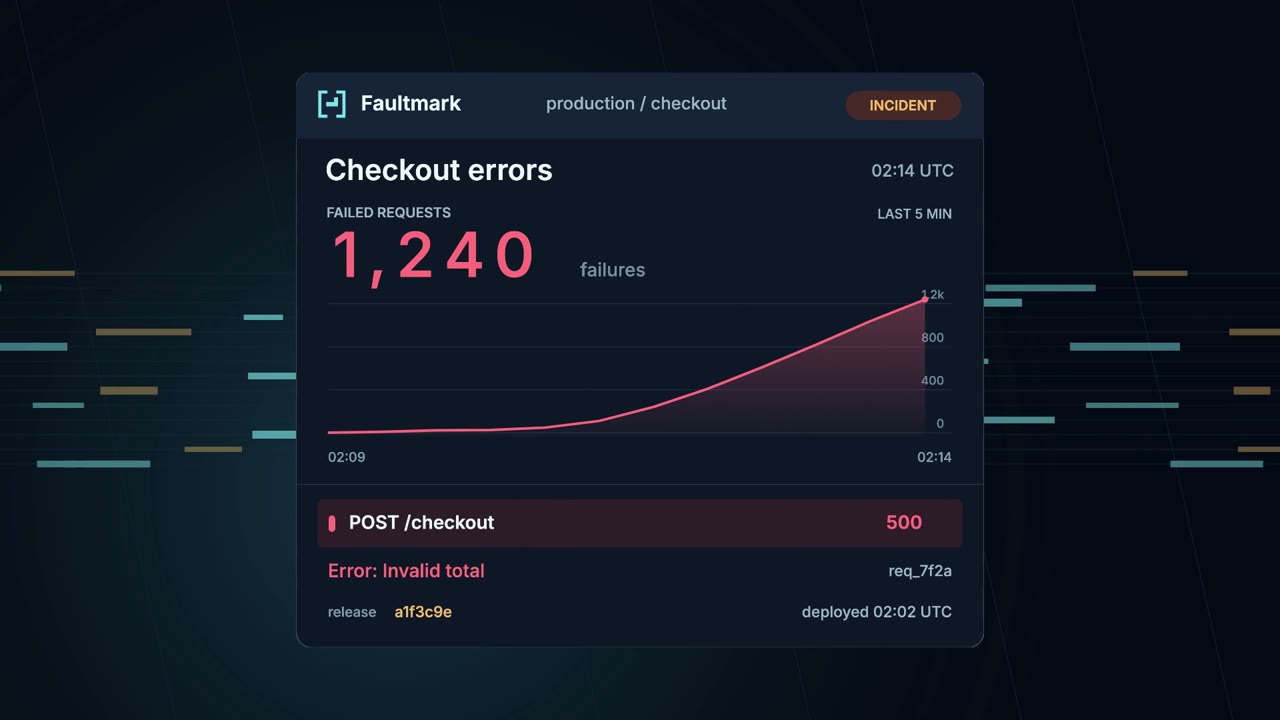
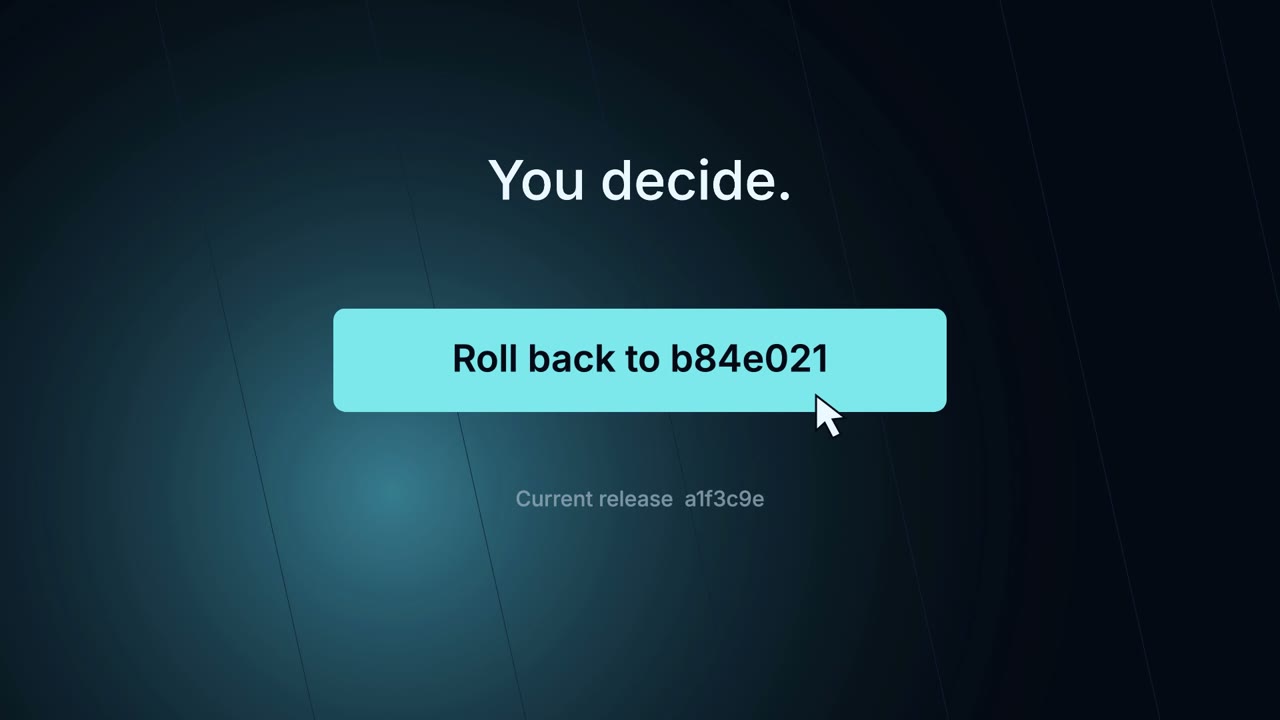
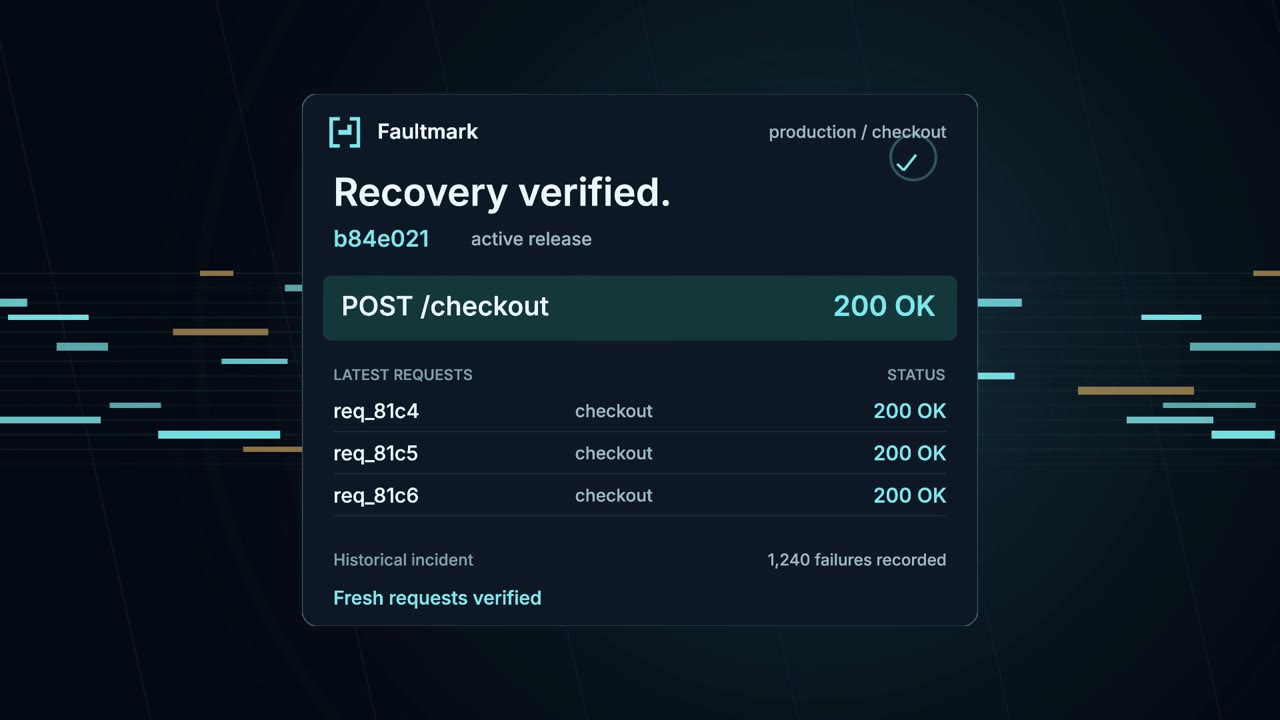
- The alert, the failing request (POST /checkout, 500), cart.ts line 88 and commit a1f3c9e. A person presses Roll back, and fresh requests verify the recovery.
- What it does not promise
- An automatic fix or a recovery time. The 1,240 failures are sample data, not a measured rate.
Shot by shot
Every step of the trace stays on screen long enough to read.
Dense interface, tight crops and a camera that never stops, so the detail reads as evidence rather than decoration.
One story, three formats
Three native compositions, one clock.
Each format is laid out for its own frame, then all three play together here so you can compare them shot for shot.
Craft
An interface drawn in code, sharp at any size.
No screenshots: every panel, trace and line of code is rendered from the film's own source, so it stays crisp in every format.
Production notes
How it was made
Concept film for a fictional product. Directed by Eric Moore. Built in code. Music and most sound effects are AI-generated.
Midnight navy, ice and cyan, with amber for warnings and red only for failures. The mark, an interrupted pair of brackets, was drawn for the film.
Faultmark is invented. The film shows a person deciding to roll back; it claims no automatic fix and no measured result.